



 By
By 
Lucian Cook from Savills, one of the best property researchers in the UK, recently worked with Insight Advantage and Andrew Smith to investigate the Bank of Mum and Dad and their impact on First-Time Buyers (FTBs), including feedback from a random sample of just over 1,000 First-Time Buyers.
Key insights from the survey and Lucian’s analysis
According to the research, the most striking finding is that ‘53% of first-time buyers (FTBs) received financial help from family towards their deposit last year’, with that direct assistance totalling an enormous £11 billion.
However, the research suggests that focusing purely on money handed over for a deposit significantly understates the role families play.
Savills and Insight Advantage estimate that first-time buyers living rent-free with their parents after education were effectively able to save a further £7.6 billion towards getting onto the housing ladder.
Put the two together and the research identifies at least £18.6bn of direct and indirect family financial support:
-
- £11bn – financial assistance from family towards deposits
- £7.6bn – estimated additional savings made possible by living rent-free with parents
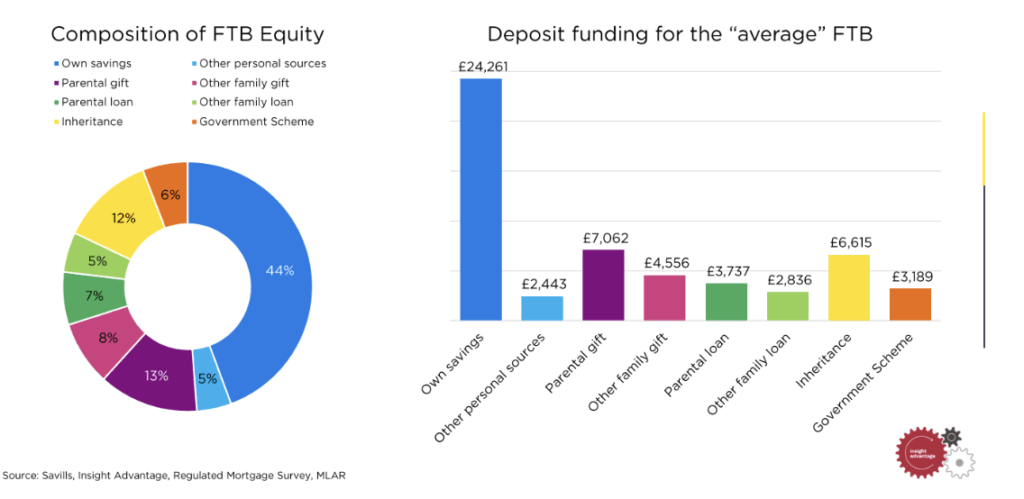
Despite this much being gifted, perhaps the most surprising is that the majority of the deposit money comes from first-time buyers’ own savings!
Source: Beyond the bank of mum and dad- LinkedIn
They also investigated where the money comes from for FTB deposits and surprisingly, almost half of those receiving loans or gifts get some help from family members other than the Bank of Mum and Dad.
The earlier research also makes the point that support comes from a variety of family sources, rather than simply parents. Lucian describes the findings as showing “big levels of deposit support” from across the family.
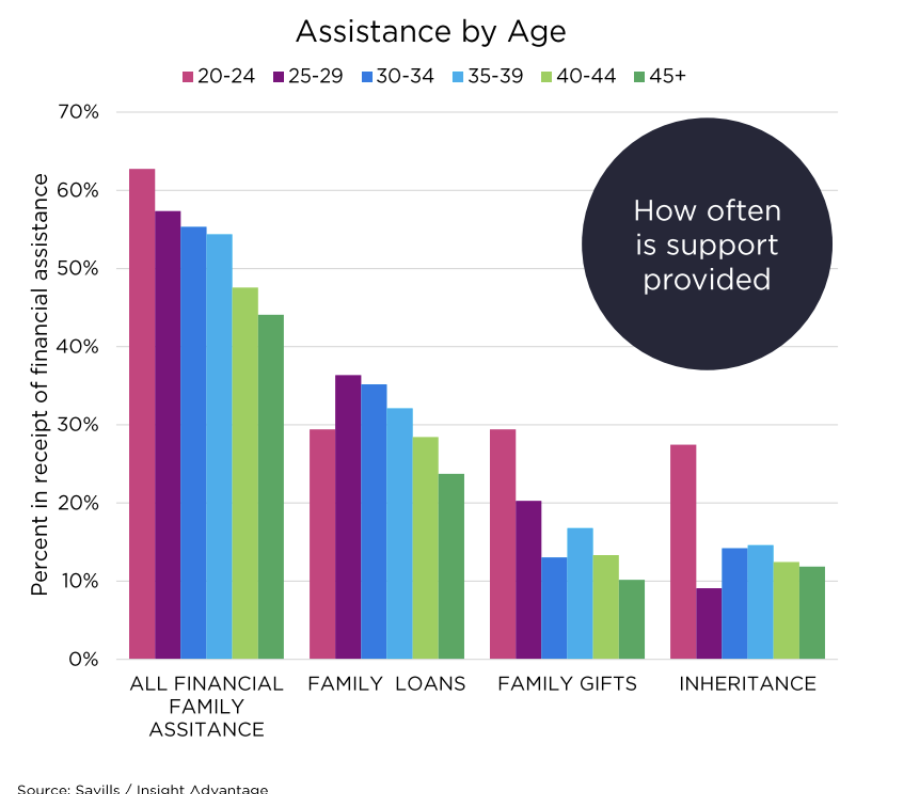
That’s quite an important distinction for the housing debate. Family resources increasingly appear to influence whether and when someone can buy, whether that support is a cash gift, help from wider family or the ability to live at home without paying rent, with younger first-time buyers much more likely to receive direct financial assistance.
Source: Beyond the bank of mum and dad- LinkedIn
The latest part of the research moves beyond how much money families provide and looks at first-time buyers’ attitudes towards it – including whether the system is fair and whether government is doing enough.
One statistic referenced in the discussion is particularly striking: 73% say access to family support is the biggest factor.
That potentially changes the way we should think about first-time buyer affordability. We normally focus on house prices, mortgage rates, incomes and deposits, but this research suggests there is another increasingly important dividing line: whether someone has family who are in a position to help them.
However, what this research also shows is that 47% of FTBs bought without receiving any help whatsoever and perhaps the most important research to do next: who is successfully buying without family wealth, where are they buying and how are they doing it?
This matters because if significant numbers of FTBs can buy independently in more affordable markets, but don’t investigate their options because they assume home ownership is beyond them, then the policy response could be quite different.
Rather than concentrating solely on financial assistance, surely we should be researching about what individual FTBs can actually afford and where, alongside measures addressing genuine affordability and housing supply constraints.












Comments