


 By
By On Tuesday, 3rd March, Rachel Reeves, Chancellor of the Exchequer, announced the 2026 Spring Statement, pointing to the Office for Budget Responsibility’s (OBR’s) economic forecasts as a sign that the government’s economic plan is the “right one”.
Whilst the statement didn’t announce any major changes to tax or spending and was a low-key affair compared to the previous 2025 Autumn Budget, it provides us with an update regarding fiscal and economic performance and other important factors at play.
Stability was the overall theme, as Rachel Reeves notably put it, “this government has restored economic stability in an uncertain world”, it’s important to acknowledge that forecasts do not take into account any potential impact from the ongoing conflict and escalations of tension across the Middle East.

Let’s turn to what the spring statement is, the key takeaways, and how this impacts the UK property market.
What is the Spring Statement?
The Spring Statement is one of the two government fiscal events made annually alongside the Autumn Budget. The Spring Statement is in fact a statement and is essentially the government’s response to economic forecasts from the Office for Budget Responsibility, and assessing this within a political lens. It has replaced the previous Spring Budget in an attempt to remove the impact of market speculation, which tends to surround big fiscal and economic announcements.
What were the key highlights for the UK Property Market?
Key Highlight: Economic Growth Downgraded
The Office for Budget Responsibility announced a 0.3% downgrade to economic growth forecasts to 1.1% in 2026 (previously forecasted to be 1.4%), indicating economic growth to be slightly slower than expected, but set to be stronger in the years ahead. Economic forecasts are set to increase to 1.6% in 2027 and 2028, and remain unchanged at 1.5% in 2029 and 2020.
Overall, this won’t have a massive impact on the UK property market and its performance, and in fact, slow and steady growth is more positive than none at all. Stability will reduce any short-term uncertainty for property investors.
Key Highlight: Inflation Rates Set to Reduce Faster
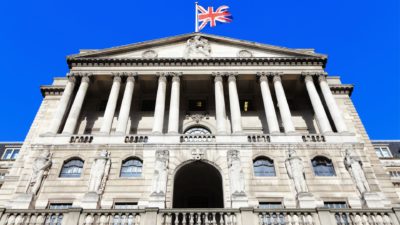
There’s continued optimism surrounding lower inflation forecasted as the Office for Budget Responsibility states it expects inflation to come down “even faster than it forecasted in the Autumn Budget and forecasts inflation to reach 2.3% in 2026 and the Bank of England’s target of 2% by the end of the year.
Lower inflation rates are likely to lead to lower interest rates, translating to cheaper borrowing rates sooner rather than later
Key Highlight: Unemployment Set To Reach a Peak
What is not so positive is the forecast for unemployment rates, as it has increased its forecasts for unemployment, expecting it to peak to 5.3% this year. But things will get worse before it gets better. The OBR expects unemployment to gradually reduce to 4.1% by 2030.
The link between unemployment rates and the UK property market can have a profound impact on affordability pressures for tenants, potentially rising rent arrears and more caution for first-time buyers.
In Summary
Overall, the Spring Statement didn’t cause any turning of heads in its announcement and was as low-key as expected, but it did serve its purpose in reviewing overall economic performance and what we can expect ahead. As we move into the future, it’s also very clear that the UK economy is highly vulnerable to escalating geopolitical factors, as the OBR warns that the escalation of tensions in the Middle East could have a ‘very significant’ impact on the UK economy.
For a full recap of the 2025 Autumn Budget, join the LIS Community Hub for free here to hear the UK’s leading property experts break down what the 2025 Autumn Budget means for UK landlords, property investors, and the wider property market in an on-demand webinar.
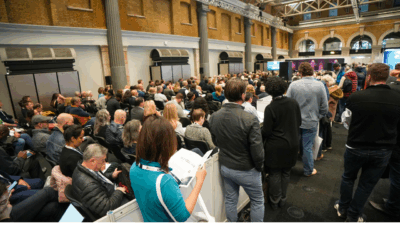
As always, staying up to date and informed by the experts is key to your property investment journey, so attending educational events such as the National Landlord Investment Show in 2026 will help you understand how politics and economics play central roles in impacting UK property market performance. Get your free ticket to the 2026 shows to join Kate Faulkner OBE, a leading UK Property Analyst, deliver her property, politics, and economics seminar today!

















Comments